Planning a new steel warehouse1? Hidden costs can quickly ruin your budget. Understanding the key price drivers from the start is the only way to stay in control.
The final cost of a steel warehouse1 is primarily driven by five factors. These are the total amount and price of steel, the efficiency of on-site installation, specific design standards for its intended use, the site's ground conditions for the foundation, and the choice of cladding materials and logistics.
This might seem straightforward, but the devil is in the details. As a steel structure manufacturer with over 15 years of experience, I've seen countless projects where budgets spiral because one of these factors was underestimated. We need to look at each one carefully. Let's break down where your money really goes and how you can manage it effectively.
How Much Does Steel Itself Affect the Total Price?
Worried about the price of steel? This single material dictates your project's base cost. It is the most significant expense you will have, so you must get it right.
The raw steel is the core of your budget, making up 70-80% of the total project cost. The final steel price depends on two things: how much steel you need (tonnage) and the unit price of the specific steel grade2 you choose.
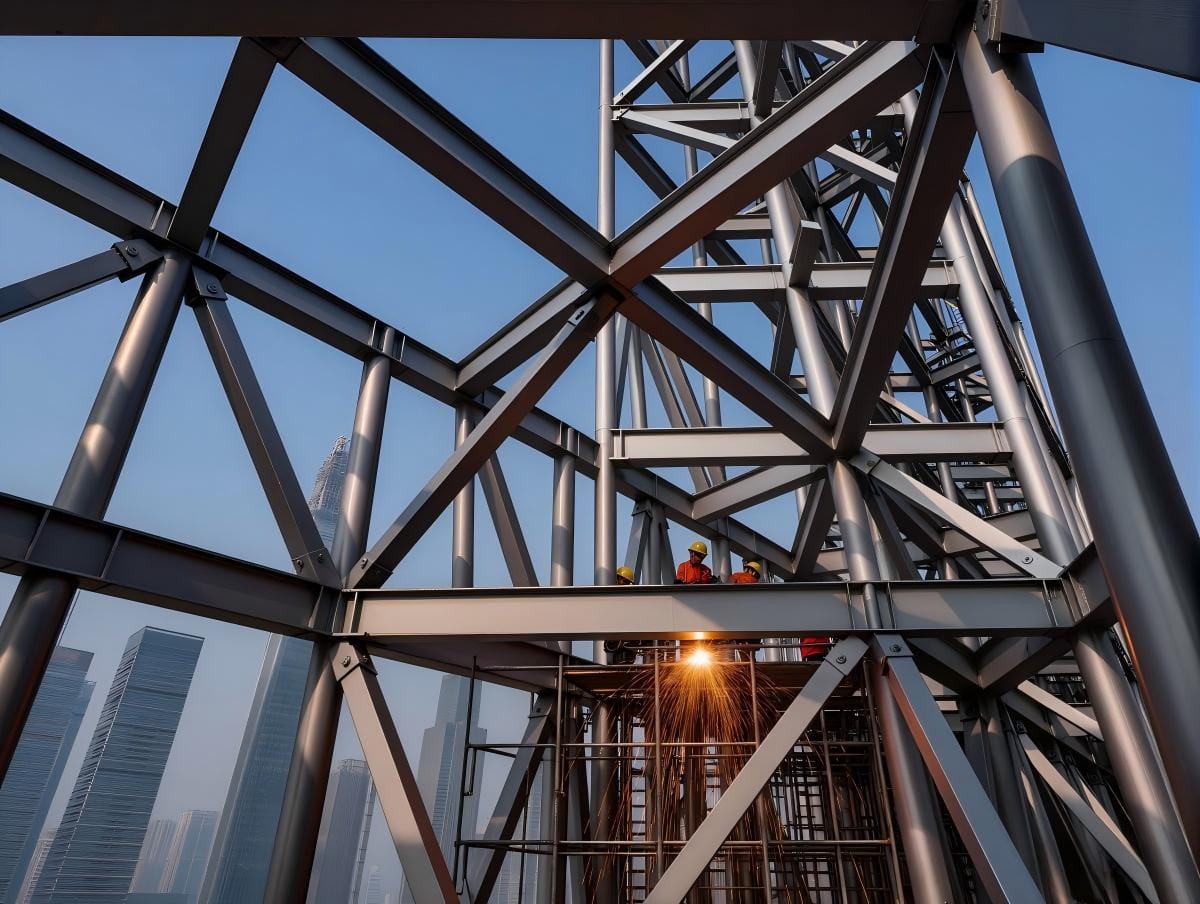
I always tell my clients to think of it like cooking a meal. The cost of the main ingredient sets the base price for the dish. In our case, steel is the main ingredient. The amount of steel isn't just a guess. It's calculated based on your warehouse design. Things like the span between columns, the roof slope, and local building codes3(https://en.wikipedia.org/wiki/Building_occupancy_classifications)%%%FOOTNOTE_REF_4%%% for wind and snow loads all directly impact the design. A wider span needs thicker, heavier beams, which increases the total steel tonnage5. The grade of steel also matters. We often use S235 and S355 steel. They have different prices and properties. We help clients choose the most suitable grade for their project's safety needs and budget. We make sure you don't waste money on over-specified materials.
Deeper Dive: Tonnage and Grade
The two components of steel cost are quantity and quality. Let's look at them separately.
1. Steel Tonnage (Quantity)
This is determined by structural engineering. The engineer's goal is to create a safe, functional building using the least amount of material. Key factors include:
- Span and Bay Spacing: Wider unsupported spans require much deeper and heavier beams.
- Building Height: Taller buildings need stronger columns to handle wind loads and vertical weight.
- Local Loads: A warehouse in a snowy region needs a stronger roof structure than one in a tropical climate.
2. Steel Grade (Quality)
Different projects require different steel strengths. Using a higher-grade steel can sometimes reduce the total tonnage needed, but the material itself costs more per ton.
| Steel Grade | Common Use | Price Level | Key Benefit |
|---|---|---|---|
| S235 | Standard structural use, secondary beams | Lower | Cost-effective for less demanding structures. |
| S355 | Primary beams, columns, high-load areas | Higher | Higher strength allows for lighter, more efficient designs. |
We work with you to find the perfect balance. We ensure the structure is safe and compliant without overspending on unnecessary steel.
Can Installation Efficiency Really Save You Money?
Is on-site labor a major cost? In many regions, installation can cost more than the steel itself. Inefficiency here directly burns through your budget every single day.
Yes, a fast and efficient installation process drastically cuts costs. This is especially true in Europe, Australia, and North America where labor is expensive. High prefabrication6 is the key to shortening on-site work, saving weeks of labor, machinery, and management fees.
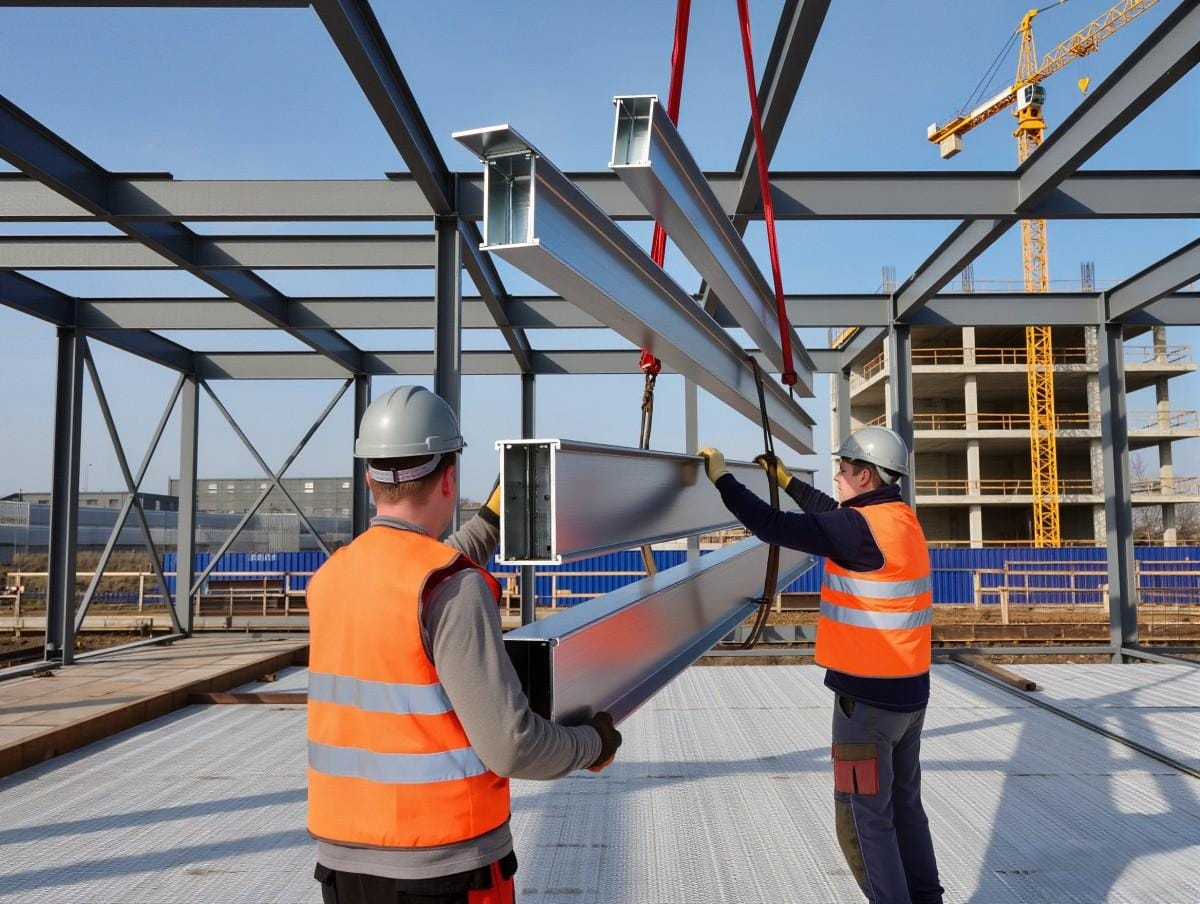
The saying "time is money" is a hard reality in construction. Every extra day on-site means more money spent on wages, equipment rental, and site management. A skilled installation team using a smart construction plan can shorten a project by weeks. This is why at Ruibiya, we focus heavily on prefabrication6. Most components are precisely manufactured in our factory. They arrive on-site ready to be assembled, almost like a giant Lego set. This method massively reduces the need for on-site cutting and welding. It not only speeds up the process but also ensures higher quality and accuracy, because factory conditions are much more controlled than a construction site. This directly translates to significant savings for our clients.
Deeper Dive: The Power of Prefabrication
On-site work is slow, expensive, and subject to weather delays. Prefabrication moves most of this work into a controlled factory environment. Here’s how it saves you money:
1. Reduced On-site Labor
In countries with high labor costs, this is the biggest saving. Instead of paying a large team for weeks of complex welding and cutting on-site, you need a smaller assembly crew for a shorter period. A project that might take 8 weeks of on-site fabrication could be assembled in just 3-4 weeks.
2. Increased Accuracy
Our factory uses CNC machines for cutting and automated welding robots. This ensures every piece matches the BIM model with millimeter precision. When components fit together perfectly on-site, there are no delays caused by parts not fitting. This eliminates the need for costly on-site rework and modifications, which are a common source of budget overruns.
3. Faster Project Completion
A shorter construction schedule means your warehouse becomes operational sooner. You can start generating revenue earlier. This reduction in the overall project timeline from groundbreaking to handover is a huge financial benefit that many people overlook when just comparing material prices.
Why Does the Warehouse's 'Function' Change the Budget So Much?
Thinking a "warehouse" is just a simple box? The way you plan to use the space is the biggest variable and where budgets often go wrong. This is where experience truly matters.
The specific function of a warehouse dictates the design standards for everything from fire safety7 to insulation. A simple storage shed has very different, and much cheaper, requirements than a warehouse that includes offices, cold storage, or residential areas.
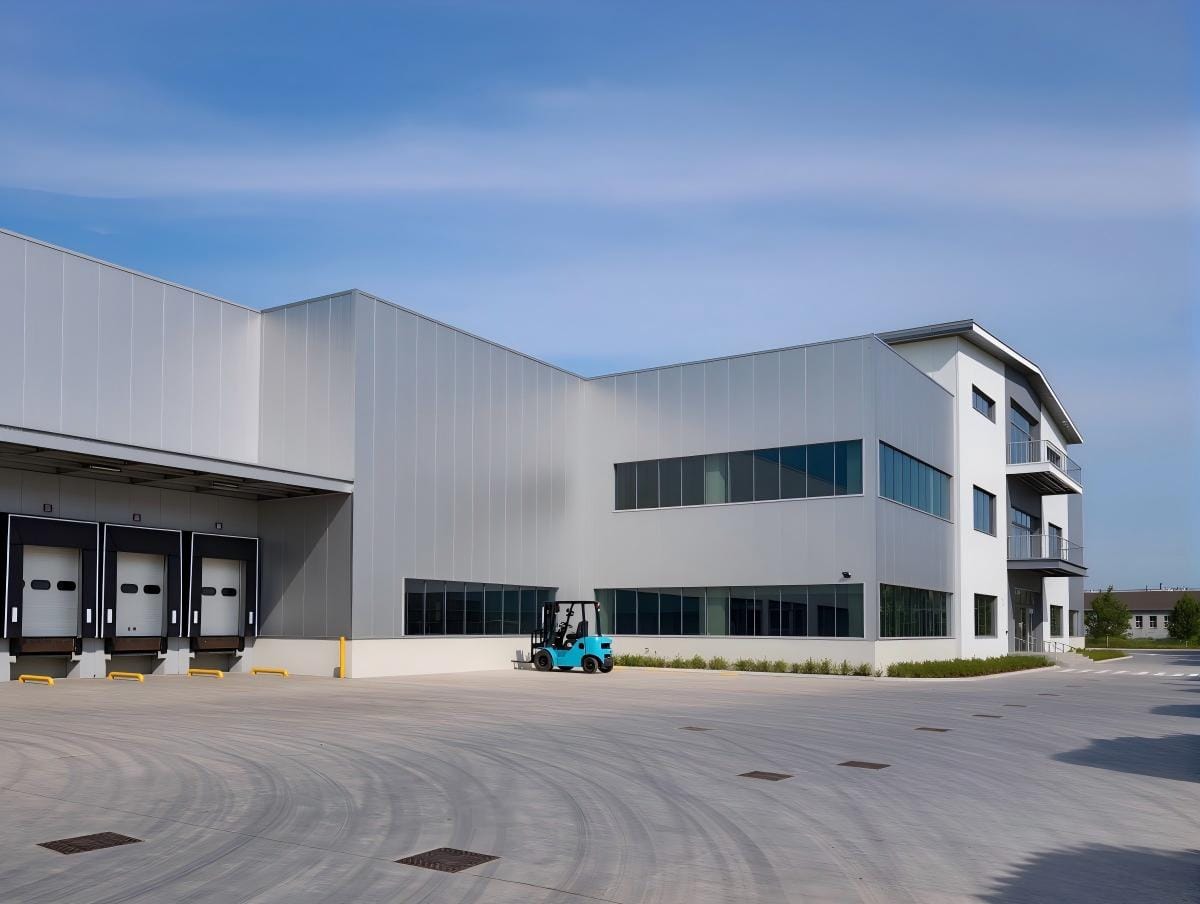
I have to share a story about a client in Australia. Initially, we quoted for a standard industrial warehouse. Everything was moving along smoothly. Then, during the design finalization, he mentioned that a part of the warehouse needed to function as a living space. That one sentence changed the entire project. The structure now had to meet Australia's strict Building Code (BCA) for residential buildings. This meant higher standards for fire rating, insulation, structural integrity8, and utilities. The cost increased significantly. That's why we always ask detailed questions at the start. Is the warehouse purely for storage? Will it have offices, a mezzanine, or a showroom? Do you need a crane, and what is its capacity? These answers fundamentally change the design and the final price.
Deeper Dive: Function Defines Specification
The term "warehouse" can describe many different types of buildings. The cost difference between them is enormous.
| Requirement | Standard Storage Warehouse | Warehouse with Office/Habitable Space |
|---|---|---|
| Structure | Standard industrial load-bearing | Higher load capacity for mezzanine floors, stricter deflection limits |
| Fire Rating | Basic fire protection on steel | Higher-rated, thicker fireproof coatings or board systems |
| Insulation | Optional, basic roof insulation | High-performance wall and roof insulation for thermal comfort |
| Cladding | Single-skin metal sheets | Insulated sandwich panels, architectural facades, windows |
| Utilities | Basic lighting and power | Complex HVAC, plumbing, data, and emergency systems |
Before we even talk about price, we need to establish a clear "basis of design." We hold detailed discussions to define every aspect of the building's use. This prevents surprise costs and ensures the final building is perfectly suited for your operational needs, compliant with all local codes, and aligned with your budget.
Is the Foundation Really a Major Cost Factor?
Do you only focus on the steel structure above ground? The foundation beneath it can be a hidden and very expensive part of your project. It’s a real budget black hole.
Yes, the foundation is a huge cost factor, often around 15% of the total price. If the ground conditions at your site are poor, such as soft soil or backfill, the cost for deep piles and ground reinforcement can escalate without limit.
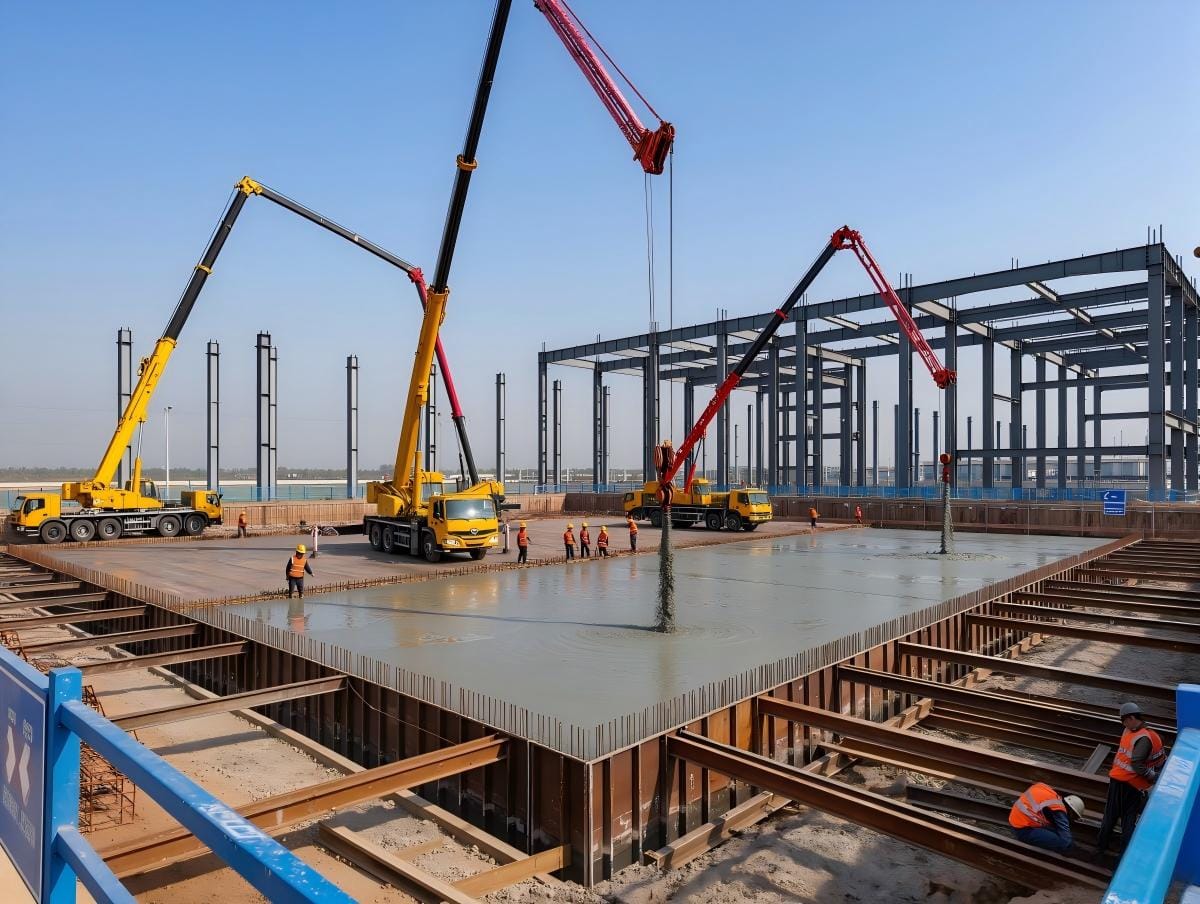
The steel structure you see is impressive, but it all rests on the foundation you don't see. We often joke that this part of the job can be a "money pit." The logic is simple. Building on hard, stable rock is very different from building on soft sand or reclaimed land. If your project site has poor soil conditions, you can't just pour a simple concrete slab. You may need to drive deep piles into the ground to reach stable bedrock or perform extensive soil reinforcement. This work involves a lot of extra concrete, steel rebar, specialized machinery, and labor. All of this adds significant cost and time to your project schedule before the first piece of steel even arrives.
Deeper Dive: What Lies Beneath Matters
Never underestimate the ground your warehouse will stand on. A geotechnical survey is the first and most critical step. This report tells us what we're dealing with.
1. The Importance of a Geotechnical Report
This report is a soil analysis performed by a specialized engineer. It details the soil type, its load-bearing capacity, and the water table level. Without this report, any foundation design is just a guess, and that is a huge financial risk. We always insist on having this information before finalizing the structural design and cost.
2. Foundation Types and Costs
| Soil Condition | Foundation Solution | Cost Implication |
|---|---|---|
| Good (e.g., rock, dense gravel) | Shallow foundations (isolated footings, strip footings) | Low. Minimal excavation and concrete required. |
| Poor (e.g., soft clay, silt, backfill) | Deep foundations (driven piles, bored piles) or ground improvement | High to Very High. Requires specialized equipment, more materials, and longer schedule. |
Ignoring poor soil conditions is not an option. It leads to building settlement, structural cracks, and potentially catastrophic failure. Investing in the right foundation from the start saves you from far greater costs and dangers in the future.
Are Cladding and Logistics Just Minor Details?
Think the main structure is the whole story? The "skin" of your warehouse and getting it to your site are crucial details that can have a big impact on the final invoice.
Cladding and logistics are not minor details; they are significant cost centers. Your choice of wall and roof panels, along with the project's location, can add substantial material and transportation costs that must be factored into the budget from day one.
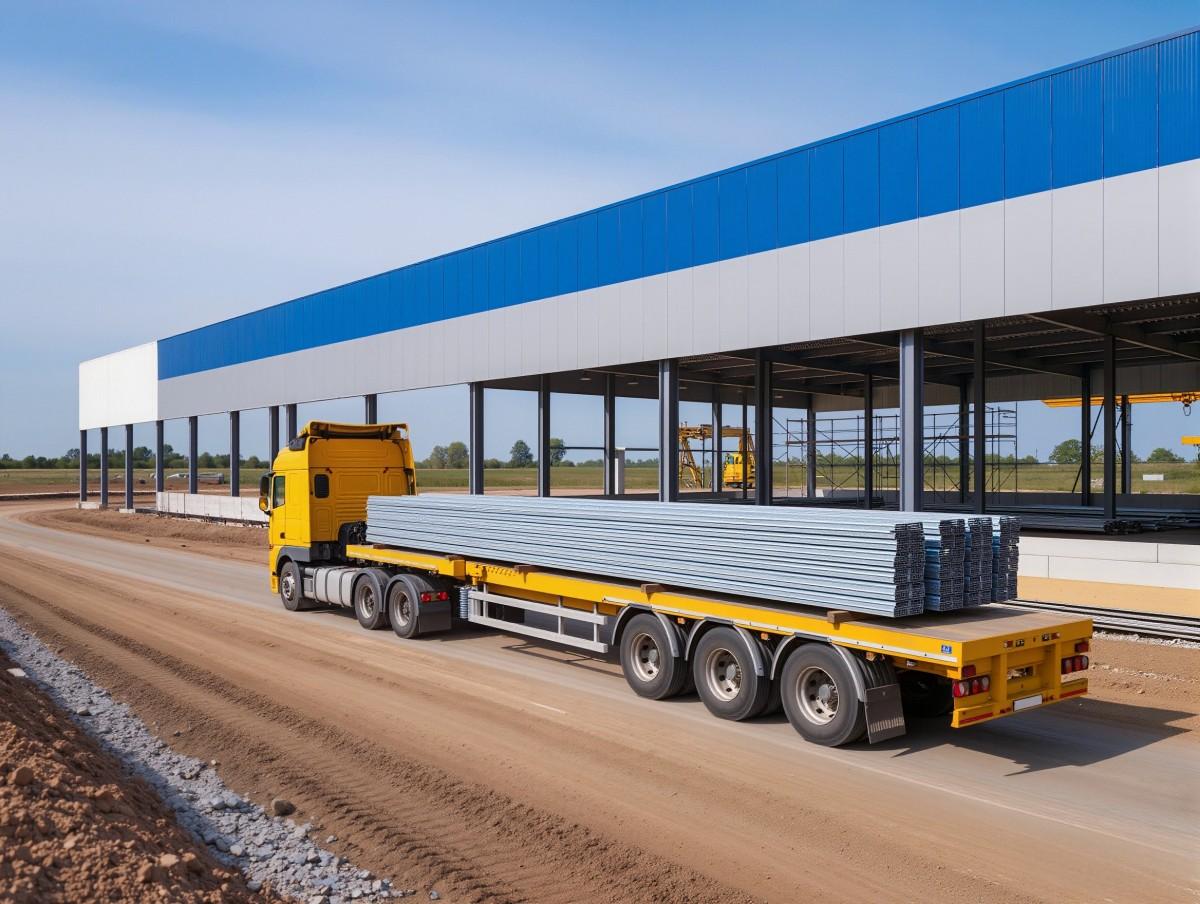
The "coat" for your warehouse—the roof and wall cladding—comes with many options. Do you need a simple, single-layer metal sheet just to keep the rain out? Or do you require insulated sandwich panels with rock wool for thermal and acoustic performance? The thickness of the panel and its fire-resistance rating will directly influence the material cost. Furthermore, the project's physical location is a key factor. We have delivered structures to remote, mountainous regions. Just getting the long steel beams to the site required careful planning for transport, secondary handling with smaller trucks, and specialized lifting equipment. All these logistical challenges become real costs that are added to the total project price.
Deeper Dive: The Final Pieces of the Puzzle
These "finishing touches" can make or break a budget if not planned properly.
1. The Cladding System
This is about balancing performance and cost. The right choice depends on the warehouse's function, which we discussed earlier.
- Single-Skin Metal Panels: The most affordable option. Ideal for basic storage where insulation is not needed.
- Insulated Sandwich Panels (PIR/Rock Wool): More expensive but necessary for temperature-controlled environments, offices, or buildings requiring a high fire rating. Rock wool offers superior fire resistance, while PIR offers better thermal performance. The thickness of the panel (from 50mm to 200mm) also greatly affects the price.
2. Logistics and Site Access
Transporting large, heavy steel structures is a specialized task.
- Location: A site with easy highway access is cheaper to supply than a remote site on narrow roads.
- Component Size: Sometimes, we have to design connections so that very long beams can be transported in smaller sections and bolted together on-site. This adds some manufacturing cost but can save a fortune in transportation.
- On-site Handling: Does the site have space for large cranes? Will components need to be lifted over existing buildings? These logistical puzzles must be solved and costed during the planning phase.
Conclusion
In short, your warehouse cost depends on steel, installation, function, foundation, and logistics. Understanding these five key areas ensures a realistic and manageable budget for your project.
Explore this link to understand the essential elements that influence the pricing of steel warehouses. ↩
Understand the various steel grades and how they affect project specifications and costs. ↩
Explore how local regulations can influence your warehouse design and construction process. ↩
Find out about the various building codes that can affect warehouse design and construction costs. ↩
Find out how steel tonnage is calculated and its impact on overall project costs. ↩
Explore the advantages of prefabrication in reducing labor costs and project timelines. ↩
Understand the fire safety standards that must be met in warehouse construction to ensure compliance. ↩
Explore the key elements that ensure the safety and durability of warehouse structures. ↩