Keywords: Heavy Steel Fabrication, Truss Bridge Manufacturing, Port Infrastructure, Marine-Grade Steel Structures, Modular Construction, China Steel Fabricator
1. Client Background & Project Requirements
Client: Wuxi (Jiangyin) Port Shili Port Area Yangzi Jiasheng LNG Terminal Location: Jiangyin Waterway, Yangtze River, Jiangsu Province, China
The Yangzi Jiasheng LNG Terminal is a pivotal energy infrastructure project located on the busy Yangtze River waterway. As part of a major terminal upgrade, the client required a series of robust, high-endurance steel access bridges (known as Ganglianqiao or steel connection bridges) to connect various operational platforms and piers.
The project demanded a supplier with proven expertise in heavy steel fabrication and the ability to meet the stringent safety and quality standards of the oil and gas industry.
Core Challenges & Requirements:
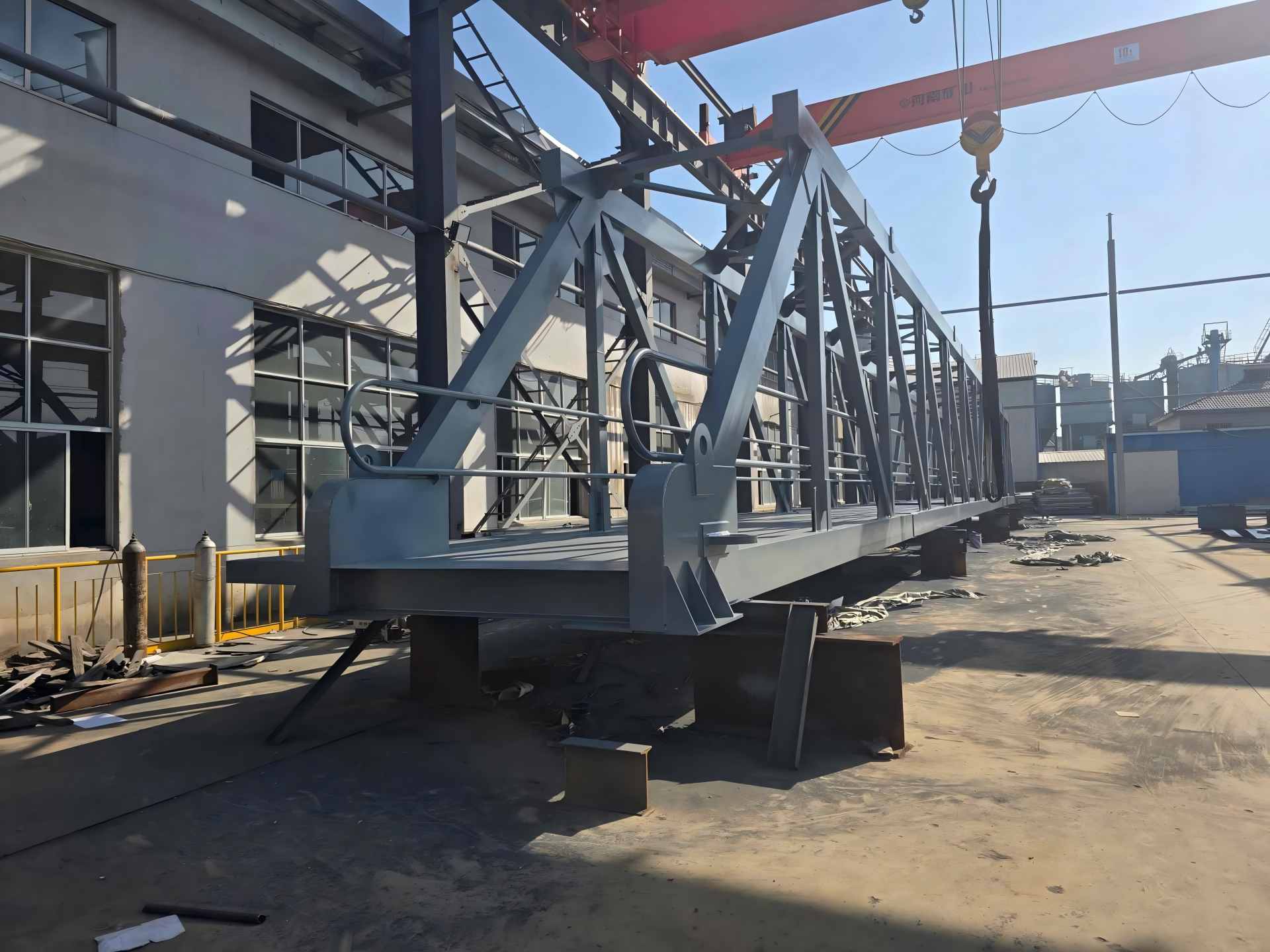
- Complex Structural Demands: The project involved fabricating six distinct truss bridges of varying lengths and weights, with the largest spanning 48 meters and weighing over 56 tons.
- Harsh Marine Environment: Located on the Yangtze River, the bridges required a superior anti-corrosion coating system to withstand high humidity, moisture, and potential chemical exposure.
- Logistical Complexity: The bridges had to be fabricated off-site, transported via waterway, and installed with minimal disruption to ongoing port activities. The two largest bridges required on-site assembly before final installation.
- Unyielding Quality Standards: All fabrication, especially welding, had to adhere to strict national codes (e.g., GB 50661, GB 50205), including mandatory ultrasonic testing (UT) for weld integrity.
Our company was selected based on our extensive experience in heavy steel structure fabrication for port and industrial applications, and our integrated capabilities covering design detailing, manufacturing, logistics, and installation support.
2. Design, Manufacturing, and Logistics
This section details our end-to-end solution, transforming raw materials into a critical piece of infrastructure.
Project Specifications at a Glance:
- Total Steel Tonnage (Estimated): ~195 Metric Tons
- Number of Bridges: 6
- Bridge Breakdown:
- 3 units: 15m (L) x 2m (W), ~9.6 tons each
- 1 unit: 21m (L) x 2m (W), ~16.8 tons
- 1 unit: 45m (L) x 2.5m (W), ~54.2 tons
- 1 unit: 48m (L) x 2.5m (W), ~56.2 tons
- Primary Steel Grade: Q235B / Q235-A
- Design & Detailing Software: Tekla Structures / AutoCAD for precise 3D modeling and shop drawings.
A. Manufacturing Process:
- Material Preparation: All incoming steel plates, I-beams, and channels underwent rigorous quality inspection. Steel surfaces were prepared using an automated shot blasting line to achieve a Sa2.5 near-white metal finish, creating an ideal profile for coating adhesion.
- Precision Cutting & Machining: Using CNC plasma and flame cutting machines, all components were cut to exact dimensions as per the approved shop drawings. Critical connection points and plates were machined to ensure perfect fit-up during assembly.
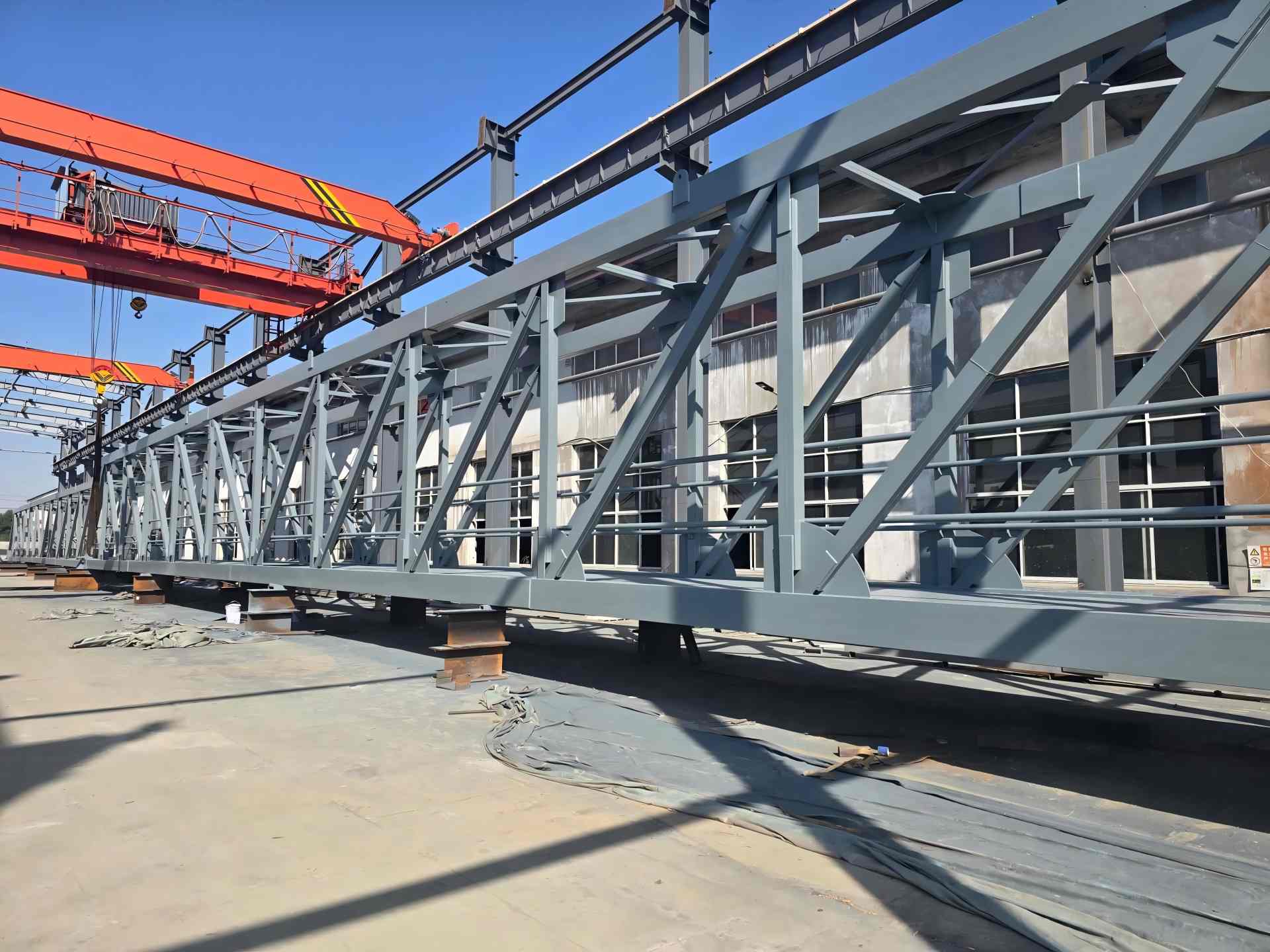
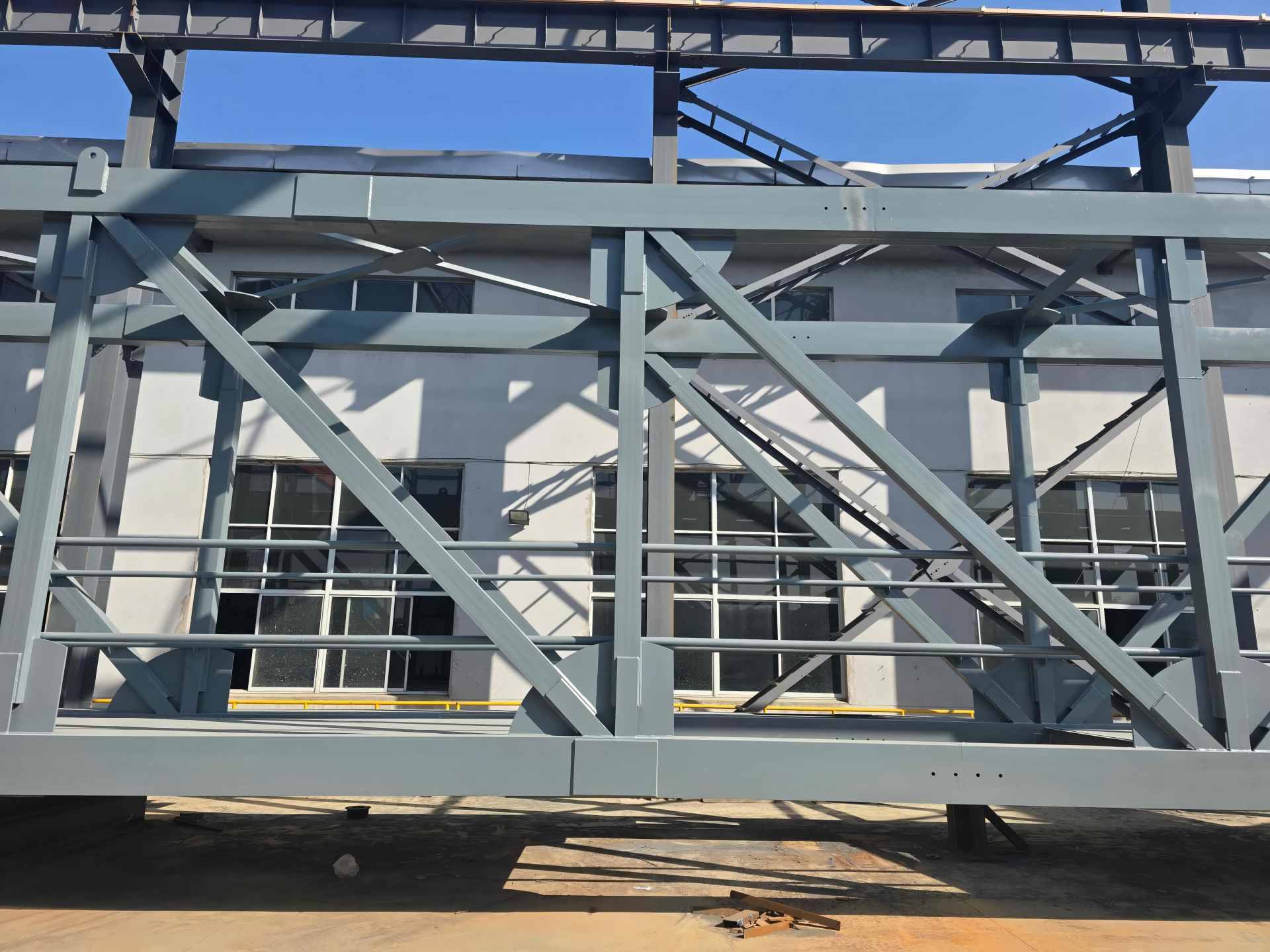
- Assembly & Welding: The truss structures were assembled in custom jigs to maintain strict geometric tolerances and control the designed pre-camber. Our certified welders employed Shielded Metal Arc Welding (SMAW) and Gas Metal Arc Welding (GMAW) techniques. All critical full-penetration welds were subjected to 100% Ultrasonic Testing (UT) to guarantee internal integrity, meeting GB 50205 standards.
- Marine-Grade Coating System: A three-layer, high-performance coating system was applied for maximum corrosion protection:
- Primer: Zinc-Rich Epoxy Primer (60μm DFT) for galvanic protection.
- Intermediate Coat: Epoxy Micaceous Iron Oxide (100μm DFT) for barrier protection.
- Top Coat: Polyurethane Topcoat in Medium Grey (80μm DFT) for UV resistance and durability.
- Total Dry Film Thickness (DFT): 240μm, ensuring long-term performance in the demanding port environment.
B. Logistics and Installation Plan:
The smaller bridges (15m and 21m) were fabricated as single, complete units. The larger 45m and 48m bridges were fabricated in two manageable sections to facilitate road and water transport. Transportation to the LNG terminal was executed via barge. For installation, a 300-ton floating crane was mobilized to lift and precisely position each bridge onto its final support piers.
3. Project Highlights & Features
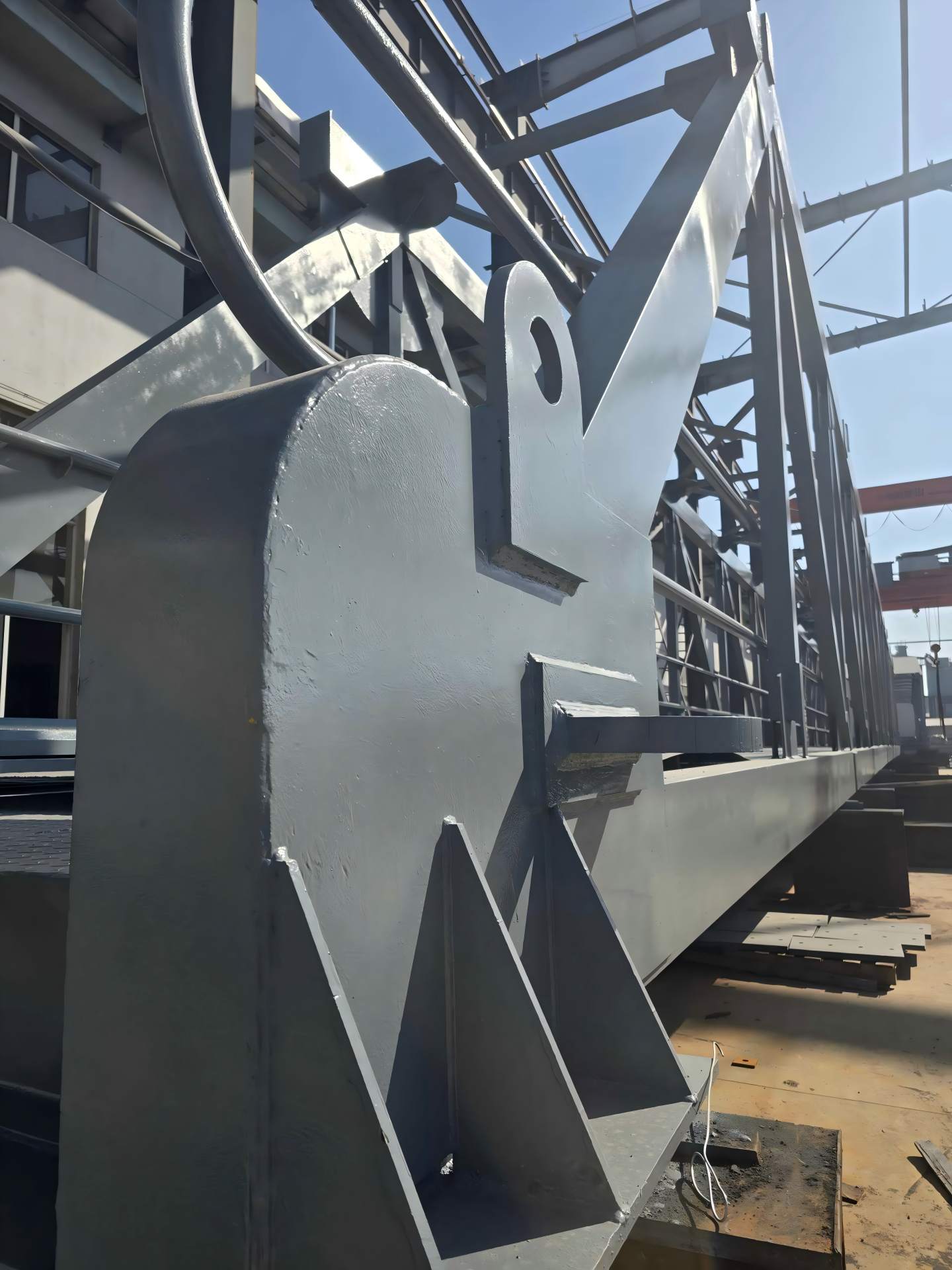
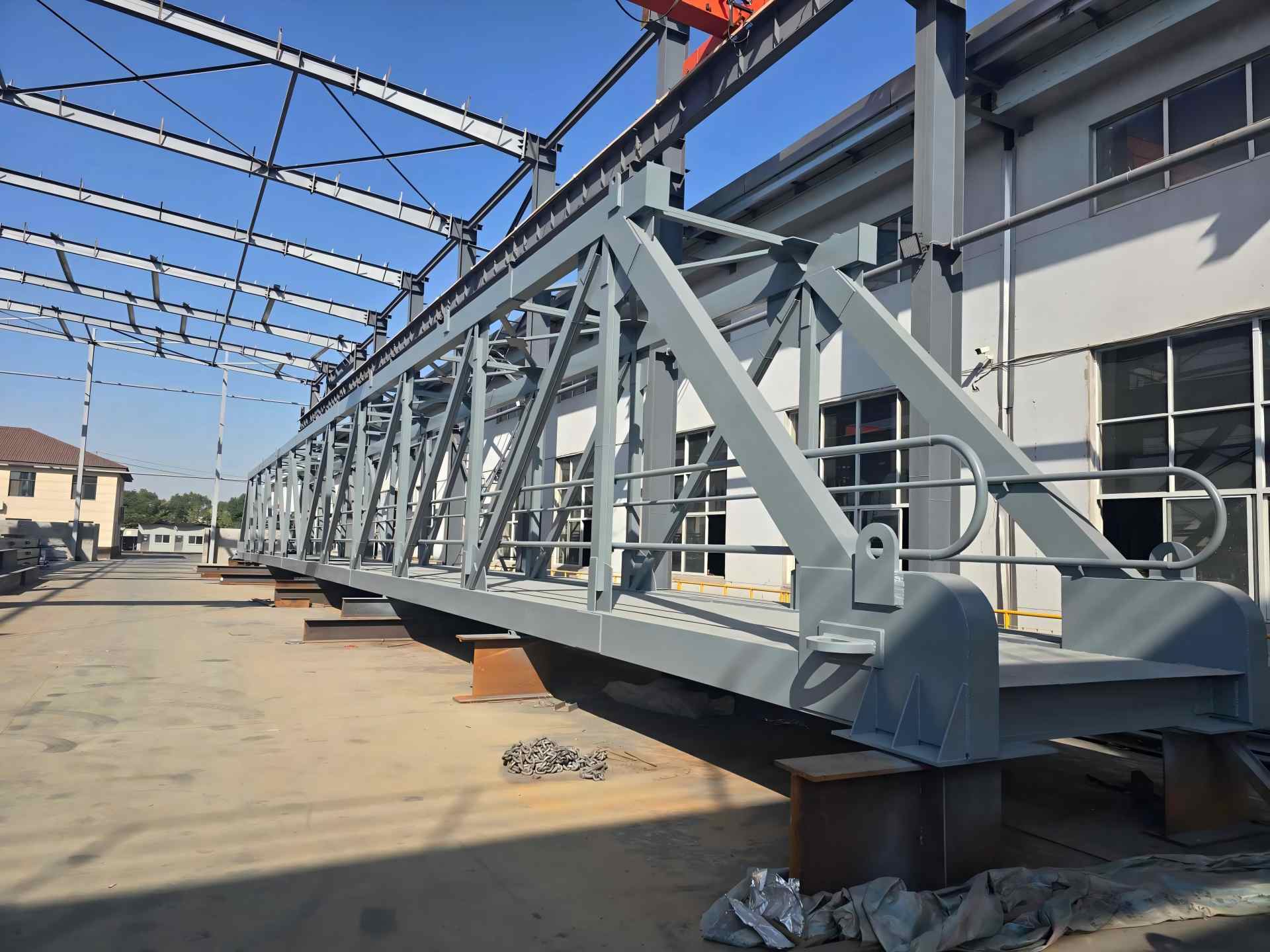
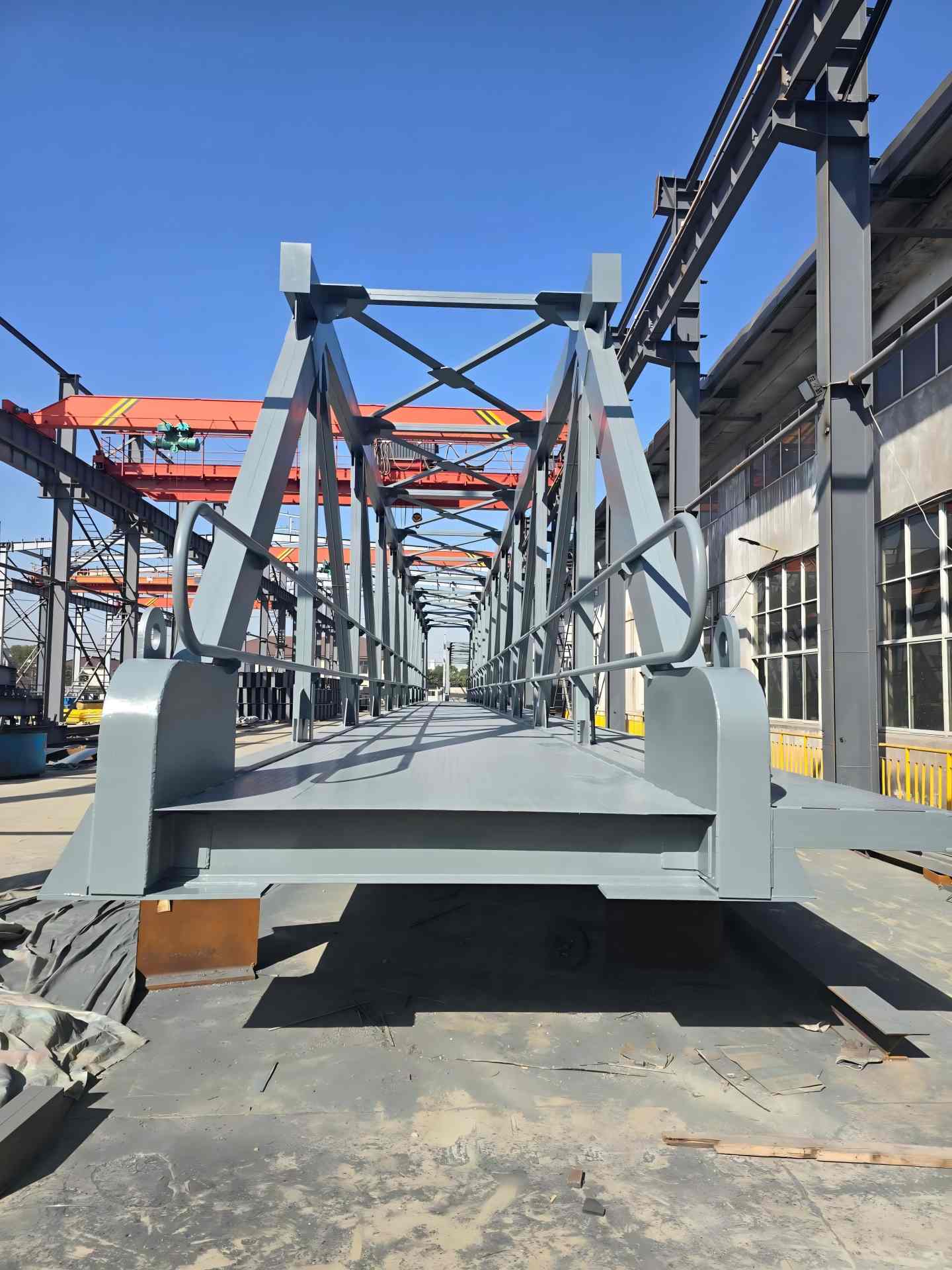
- Heavy Fabrication Mastery: Successfully manufactured and handled oversized steel structures exceeding 56 tons, showcasing our capacity for large-scale industrial projects. The robust lifting lugs and reinforcement pads visible in the photos are a testament to our engineering for safe and efficient handling.
- Modular Construction Efficiency: By prefabricating the bridges in our controlled workshop environment, we ensured higher quality, improved safety, and significantly reduced on-site construction time, minimizing disruption to the operational LNG terminal.
- Certified Welding and NDT: Our commitment to quality was demonstrated through the deployment of certified welders and the rigorous application of Non-Destructive Testing (NDT), ensuring every weld met or exceeded the project’s stringent structural integrity requirements.
- Advanced Anti-Corrosion Protection: The application of a specialized three-coat marine-grade paint system guarantees exceptional durability and a long service life, reducing future maintenance costs for the client in a corrosive environment.
4. Results & Client Testimonial
The six steel access bridges were successfully fabricated and delivered on schedule, meeting all technical and quality specifications. The installation, supported by our detailed planning, was completed efficiently, allowing the client to proceed with their terminal expansion without delay.
The finished bridges now provide safe and reliable access for personnel and equipment, forming a critical link in the terminal’s operational workflow. The project stands as a clear example of our ability to deliver complex, high-stakes infrastructure components for the energy sector.